Guide · Pattern testing · 2 June 2026
How to be a good pattern tester
Everybody wants to get involved testing designers patterns, but what does that mean?
A lot can be said for all the tester calls you see on social media. Some are genuine attempts to improve a pattern before release, and some are very clearly marketing calls with very little regard for the actual testing process.
That does not mean testing is bad. Quite the opposite. A good test can be incredibly useful for a designer, and it can also be really enjoyable for the tester. You get to work on something before it is released, you get to help shape the final pattern, and you get to be part of the process rather than just making the finished thing afterwards.
But once you get onto a tester call, what should you actually do?
1. Clarify what the designer wants before starting
Before you cast on, cut fabric, choose yarn, print the pattern, or do anything else, ask the designer what they are actually looking for from their testers.
They might be looking for confirmation that the grading works across all sizes. They might want people to look for mistakes in the written instructions. They might be checking whether the pattern photos, charts, stitch counts, measurements, or layout are easy to follow.
They might also want accessibility feedback. Is the font readable? Are the instructions clear enough? Are the abbreviations explained properly? Does the pattern assume knowledge that a beginner might not have?
If you are testing a specific size, ask what they need from that size. It might not just be “does it fit?” They might need finished measurements, photos at certain points, notes on ease, yardage used, or feedback on whether the proportions feel right.
It is much better to ask at the beginning than to get to the end and realise you have made the thing, but not tested the thing they needed tested.
2. Stay in communication with the designer
Being in a group chat on a social media platform has a lot of noise associated with it. What starts as a conversation about the project can very easily become a discussion about pets, snacks, yarn choices, life updates, and somebody’s very dramatic cat.
We crafters are social people and sometimes we forget what we are actually doing.
That is not a bad thing, but the designer still needs to know what is happening with the test. If you have had to stop for a few days, tell them. If you are stuck on a section, tell them. If life has got in the way and you are not going to meet the deadline, tell them.
Most designers would rather know early than be left guessing.
You do not need to send a huge essay every day. A simple update is enough. Something like:
“I have finished the brim and I am starting the lace section tonight.”
Or:
“I have had to pause for a few days, but I should be able to pick this back up at the weekend.”
That is far more useful than disappearing and hoping nobody notices.
3. Communicate issues with the designer clearly and privately
If you notice a typo, a stitch count problem, a missing instruction, or something that seems incorrect in the pattern, tell the designer privately before putting it in the group chat.
The issue might already have been spotted. A new version of the pattern might already be in the works. Or it might be something that only affects your size, your yarn, your gauge, or the way you have interpreted that section.
There is no need to cause mass panic among the other testers if the designer can quickly confirm what is going on.
This does not mean you should hide problems. You absolutely should raise them. That is the point of testing. But how you raise them matters.
Try to be specific. Instead of saying:
“I think this bit is wrong.”
Say:
“On page 4, under the crown decreases, round 3 says to repeat 8 times, but I think it should be 7 times for the medium size because I ended up with 6 stitches too many.”
That gives the designer something they can actually check.
4. Take useful notes as you go
A lot of people think they will remember what happened while making something.
They will not.
You might think you will remember that you used slightly less yarn than expected, or that row 12 confused you, or that the sleeve instructions felt awkward, but by the time you have finished the project your brain has replaced all of that with “it was fine, I think.”
Take notes as you go.
They do not need to be polished. They do not need to be pretty. They just need to exist.
Useful things to write down include:
- where you had to stop and reread something
- whether the stitch counts worked
- how much yarn or thread you used
- any changes you made
- where you felt unsure
- whether the finished measurements matched the pattern
- anything that would have made the pattern easier to follow
A good tester does not just say “I liked it.” A good tester can explain what worked, what did not, and where the pattern could be clearer.
5. Be honest about changes you make
Sometimes you will need to change something. Maybe your gauge is slightly off. Maybe you prefer a different cast on. Maybe you added length. Maybe you changed a yarn weight, hook size, needle size, fabric, seam finish, or construction detail.
That is not automatically a problem, but the designer needs to know.
If you changed something and then give feedback as though you followed the pattern exactly, your feedback becomes much harder to use.
For example, if the pattern says the hat should be 19cm tall and yours comes out at 22cm because you added extra repeats, that is not a pattern issue. That is a useful note, but only if you explain what you changed.
There is nothing wrong with making small adjustments, especially if the designer allows it. Just be honest about them.
Testing is not about pretending you followed everything perfectly. It is about giving the designer accurate information.
6. Respect the deadline, or be honest if you cannot meet it
Deadlines are one of the hardest parts of testing.
Everybody starts with the best intentions. Then life happens. Work gets busy. Children get ill. Pets act like tiny criminals. Your yarn does not arrive. You lose motivation. You get distracted by another project that absolutely was not supposed to be started yet.
It happens.
But if you agree to a deadline, try to treat it as a real commitment. The designer might be planning a release date around the test. They might need photos, finished measurements, feedback, or confirmation that the pattern works before they can move forward.
If you realise you are not going to finish on time, say so as early as you can.
Most designers understand that testers are people, not machines. What is frustrating is not someone needing more time. It is someone vanishing completely.
A late tester who communicates is usually much more useful than a silent tester who technically still has the pattern.
7. Remember that testing is not just free pattern access
This is probably the biggest one.
Testing is not just a way to get a free pattern before everyone else. You are agreeing to help the designer improve the pattern before release.
That means reading properly. Checking your work. Giving feedback. Taking photos if requested. Sharing measurements if requested. Pointing out unclear instructions. Letting the designer know if something does not work.
It also means respecting the pattern before it is released. Do not share the file with other people. Do not post every page online. Do not treat the test as content first and feedback second.
It is fine to be excited. It is fine to share progress if the designer allows it. It is fine to enjoy being part of the launch.
But the actual testing part still matters.
A good tester helps make the final pattern better for everyone who buys it later. That is the point.
Keep reading
Related posts
Pattern testing · 2 Jun 2026
How to run a good test project
Running a pattern test is not just about finding people to make your project before release.
Blog · 2 Jun 2026
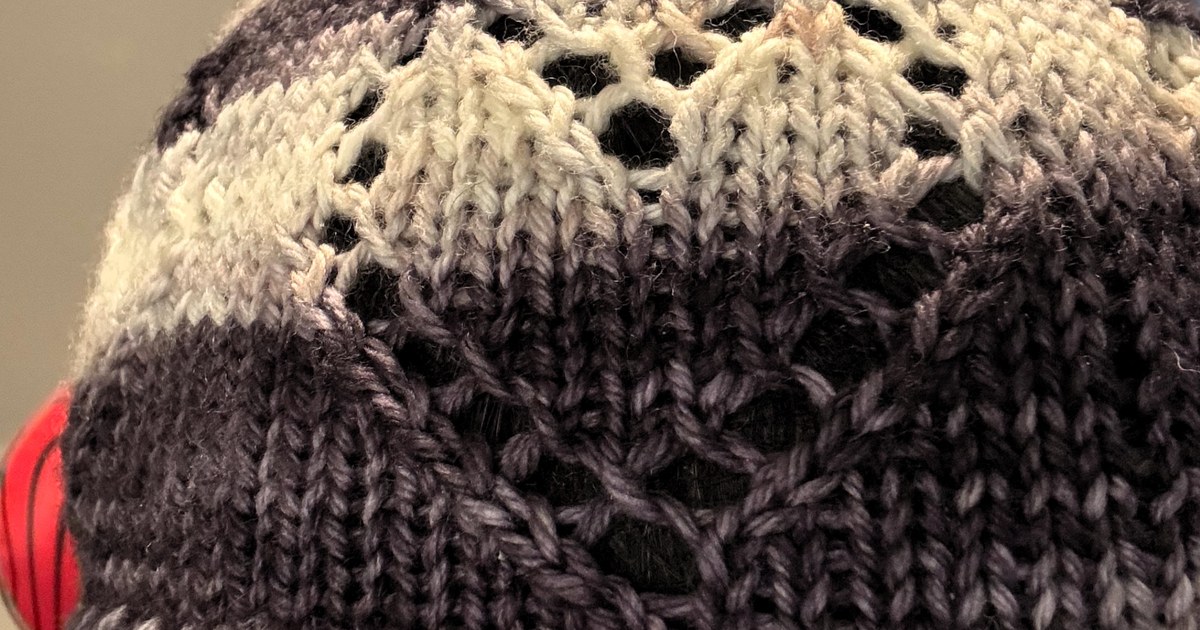
Designing the beating heart beanie
How one misheard lyric turned into a DK beanie with a folded brim, lace hearts, and far more whiteboard thinking than originally planned.
Follow the next project on Instagram
I share knitting progress, tester calls, and the colourful experiments that do not always make it into a full post.
Follow on InstagramKnit Notes
Knit Notes from Andrew
Get occasional knitting notes, pattern releases, tester calls, and behind-the-scenes project updates.