Pattern testing · Pattern testing · 2 June 2026
How to run a good test project
Running a pattern test is not just about finding people to make your project before release.
A lot gets said about how testers should behave during a pattern test, but designers have responsibilities too.
A good test project does not just happen because you post a nice tester call on Instagram and wait for people to appear. It needs structure. It needs communication. It needs a clear idea of what you are actually testing.
Some tests are really well run. Some are chaotic. Some are very clearly just marketing campaigns dressed up as testing, where the designer wants finished photos and social media buzz more than actual feedback.
That does not mean promotion is bad. Of course designers want people to see their work. But if you are calling something a test project, then the testing part needs to matter.
So, how do you run a good test project?
1. Know what you actually wanti testing
Before you open a tester call, be clear with yourself about what you need from the test.
Are you checking the grading across sizes? Are you looking for mistakes in the written instructions? Are you checking yardage? Are you trying to find out whether the charts make sense? Are you checking whether the photos, diagrams, or layout are helpful?
A test project should have a purpose beyond “I need people to make this before release.”
If you do not know what you are asking testers to look for, they will not know either.
It is fine to ask for general feedback, but general feedback is not enough on its own. Testers need direction. Otherwise you will get a lot of “I loved making this” and very little that helps you improve the pattern.
Be specific.
Tell testers what matters most. Tell them what kind of feedback is useful. Tell them if you need finished measurements, progress photos, notes on fit, notes on unclear wording, or confirmation that a stitch count works for their size.
The clearer you are at the beginning, the more useful the test will be at the end.
2. Set realistic expectations
A lot of tester calls are written as though everyone has endless time, endless money, and no other responsibilities.
They do not.
If the project is large, say that. If the deadline is tight, say that. If testers need to buy specific yarn, fabric, notions, tools, or supplies, say that before they apply.
Do not hide the difficult parts because you are worried people will not sign up. The right testers need to know what they are agreeing to.
A deadline for a hat is not the same as a deadline for a full garment. A simple accessory is not the same as a heavily cabled jumper. A one-size project is not the same as a graded pattern with several sizes that all need checking.
Be honest about the commitment.
It is much better to have fewer testers who understand the project than lots of testers who applied because the call looked fun and then realised too late that they could not manage it.
3. Make communication easy
Communication is where a lot of tests fall apart.
Group chats can be lovely, but they can also become very noisy very quickly. What starts as a test chat can become yarn chat, pet chat, dinner chat, life chat, and then the actual pattern issues get lost somewhere in the middle.
That does not mean group chats are bad. Crafters are social people. That is part of the joy of it.
But you still need a clear way for testers to give you important feedback.
Make it obvious where testers should report problems. Tell them whether you want issues in a form, by email, in a private message, in a shared document, or somewhere else.
If there is a group chat, explain what belongs there and what should be sent privately.
For example, a tester saying “I am confused by this section, is anyone else?” might be useful in the group. A tester spotting what looks like a serious pattern error might be better handled privately first, so you can check it before everyone starts worrying.
The easier you make communication, the more likely testers are to actually communicate.
4. Do not treat unfinished projects as failed tests
This is a big one.
A tester not finishing the project is not automatically a problem.
Someone can give you a lot of useful feedback and still not get over the line. They might have spotted errors. They might have checked the sizing up to a certain point. They might have found a confusing instruction. They might have confirmed that your yarn estimate is wrong. They might have helped you improve the pattern even if they did not finish the final object.
That does not mean they failed. It means they could not complete the project.
It happens.
Life gets in the way. People get ill. Work gets busy. Motivation disappears. The project turns out to be too much. The yarn arrives late. The fit is wrong. The tester realises they took on too much.
The issue is usually not that someone did not finish. The issue is when someone disappears and says nothing.
A tester who tells you they cannot complete, but gives you their notes so far, has still contributed to the test.
That is very different from someone who takes the pattern, never communicates, and then appears three months later posting the finished object like nothing happened.
Build your test around communication, not perfection.
5. Keep track of versions and changes
If you update the pattern during the test, make that really clear.
Do not just quietly upload a new file and hope everyone notices. Tell testers what changed. Tell them whether they need to download the new version. Tell them whether the change affects all sizes or only some sizes.
A simple change log can save a lot of confusion.
It does not need to be fancy. Something like this is enough:
Version 2:
- Fixed stitch count on page 4 for size medium
- Clarified round 8 of the crown decreases
- Added missing abbreviation for ssk
- Updated yardage estimate for size large
This helps testers understand whether an issue they found has already been fixed. It also stops people from testing an old version without realising it.
If testers are working from different versions of the pattern and nobody knows which version is current, the test becomes messy very quickly.
6. Ask for useful feedback, not just nice feedback
It is lovely when testers say they enjoyed the pattern.
It is lovely when they send beautiful photos.
It is lovely when they are excited about the finished project.
But nice feedback is not always useful feedback.
If all you ask is “what did you think?” then people will often be polite. They will say it was great. They will say they loved it. They will avoid saying the section where they had to reread the instructions six times made them want to throw the project across the room.
You need to make it safe and normal for testers to give honest feedback.
Ask specific questions.
Was any section unclear?
Did your stitch count match the pattern?
Did the finished measurements match what was listed?
Did you use more or less yarn than expected?
Was there any point where you had to guess what to do next?
Did the layout make sense?
Were the abbreviations clear?
Would you feel confident making this again from the pattern as written?
These questions are much easier to answer than “any thoughts?”
A good test should help you find the weak points before customers find them.
7. Respect your testers’ time
Testing is work.
It might be enjoyable work. It might be voluntary work. It might come with a free copy of the finished pattern. But it is still work.
Testers are giving you their time, their materials, their attention, their photos, their notes, and their experience. Some of them are also giving you access to their audience if they post about the project.
Respect that.
Do not keep moving the goalposts. Do not ask for more and more after the test has already started. Do not expect professional photography unless that was part of the agreement. Do not expect people to promote the pattern heavily unless you made that clear at the beginning.
A tester is not automatically a model, marketer, photographer, content creator, editor, proofreader, and customer support assistant.
Be clear about what you need, and be reasonable about what you ask for.
If you want a lot from testers, think carefully about whether a free pattern is enough in return.
8. Close the test properly
A test project should have an ending.
When the deadline arrives, do not just vanish into release mode and leave testers wondering what happened.
Thank people. Ask for final feedback. Let them know what happens next. Tell them if the release date has changed. Tell them whether they can post finished photos. Tell them how you would like them to tag you, if they want to share.
If someone did not finish, give them a chance to send the feedback they do have.
You might be surprised how useful partial feedback can be. Sometimes the person who only got halfway through found the exact issue that would have caused problems for customers later.
Closing the test properly also helps testers feel like their time mattered.
They were part of the process. They helped improve the pattern. They should not feel like they were useful until you got what you needed and then forgotten about.
A good test project is not just about getting finished objects before launch.
It is about making the pattern better, treating testers well, and building a process people would actually want to be part of again.
Keep reading
Related posts
Guide · 2 Jun 2026
How to be a good pattern tester
Everybody wants to get involved testing designers patterns, but what does that mean?
Blog · 2 Jun 2026
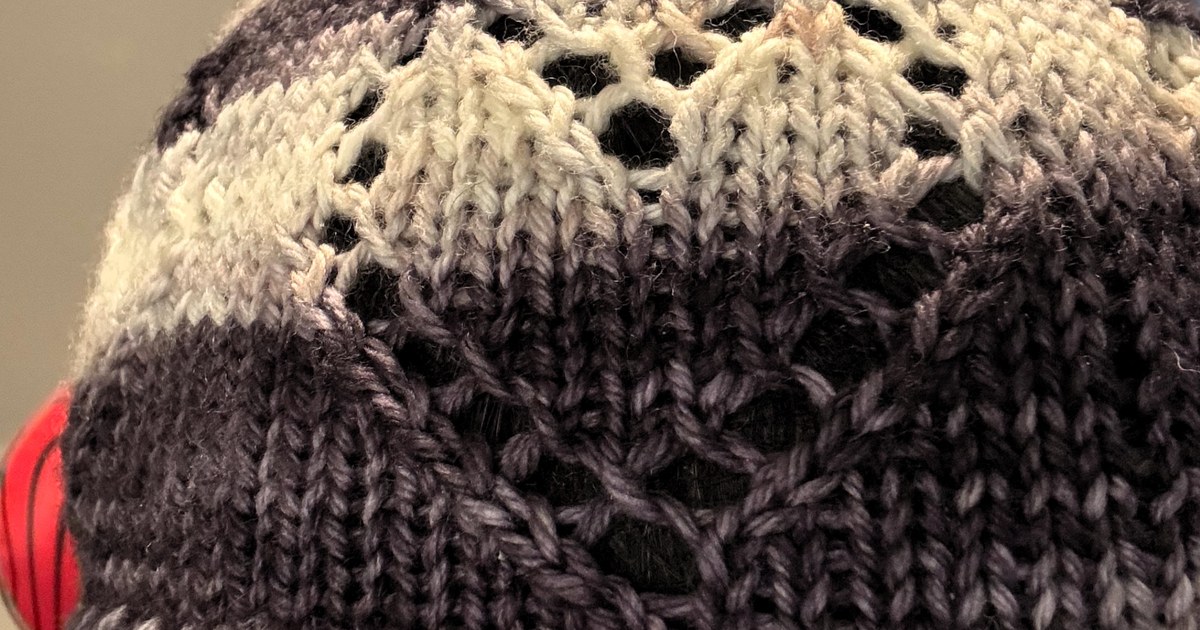
Designing the beating heart beanie
How one misheard lyric turned into a DK beanie with a folded brim, lace hearts, and far more whiteboard thinking than originally planned.
Follow the next project on Instagram
I share knitting progress, tester calls, and the colourful experiments that do not always make it into a full post.
Follow on InstagramKnit Notes
Knit Notes from Andrew
Get occasional knitting notes, pattern releases, tester calls, and behind-the-scenes project updates.